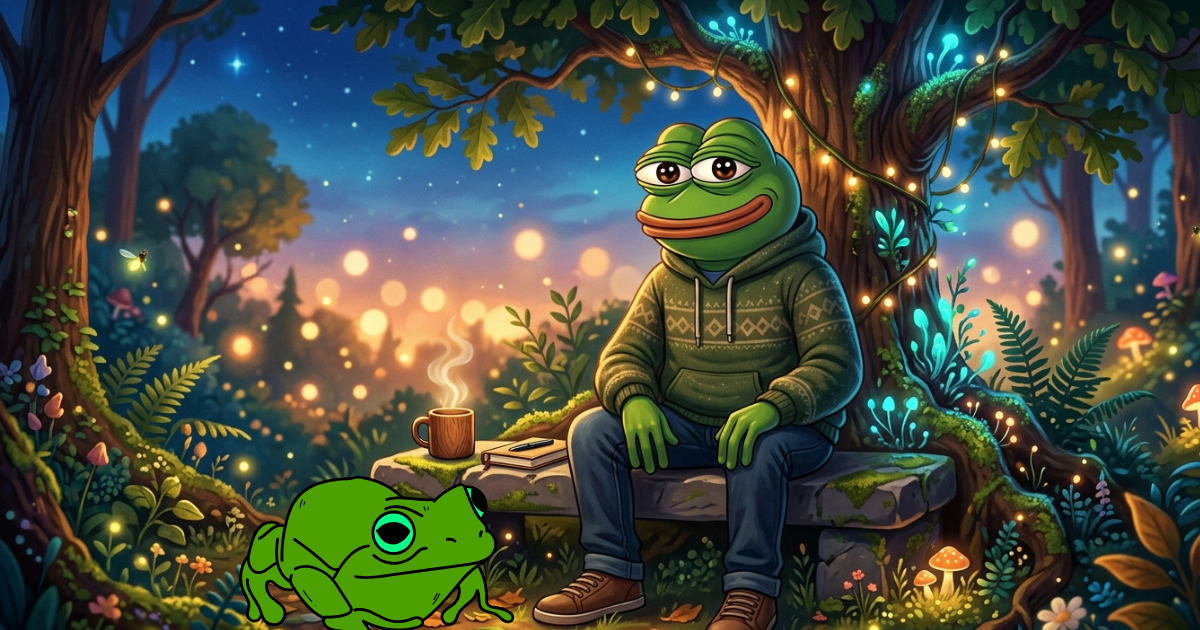
The Evolution of Pepe : From Casual Comic Strips to a Global Cultural Phenomenon
In the sprawling, chaotic landscape of the internet, few icons have journeyed as far or as controversially as Pepe the Frog. What began as a humble, nonchalant character in an indie comic strip has transformed into one of the most recognizable, widely debated, and complex symbols in digital history. To understand Pepe is to understand the soul of the internet itself: a place where meaning is fluid, authorship is decentralized, and a simple drawing can carry the weight of a thousand political arguments.
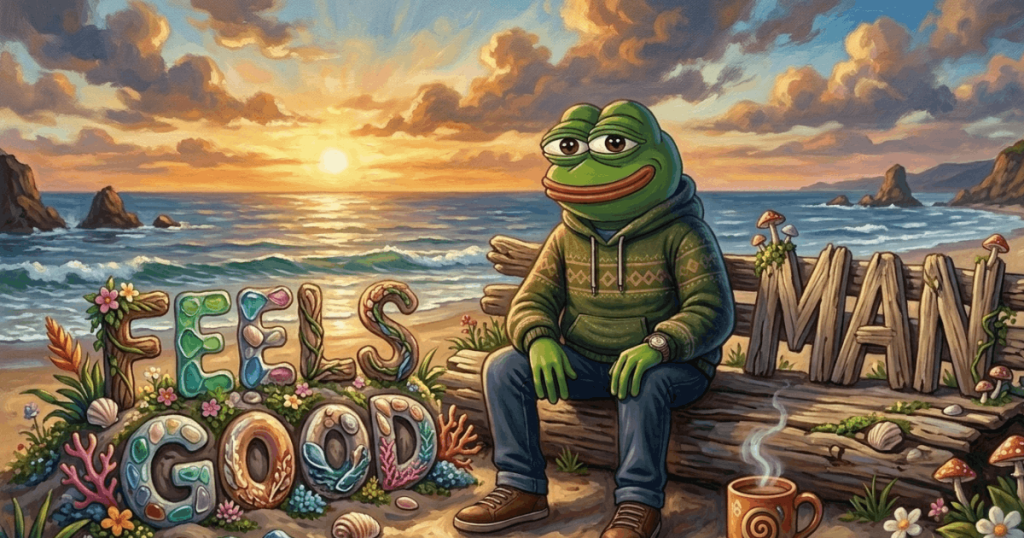
The Origin Story: “Feels Good Man”
Long before the memes, the political firestorms, and the digital ownership debates, Pepe was born from the mind of artist Matt Furie. In 2005, Furie introduced the world to Boy’s Club, a laid-back, surreal, and often crude comic strip centered on four roommates—Pepe, Brett, Andy, and Landwolf.
Pepe, in his original form, was the embodiment of simple hedonism. He was the character who didn’t worry about the complexities of life; he lived for the moment. The birth of his internet immortality came from a specific panel where a friend asks why he pulls his pants all the way down to his ankles when he urinates. Pepe’s legendary response, “Feels good man,” became the foundation of his identity. It was a phrase that resonated with the nascent culture of message boards like 4chan, capturing a unique blend of absurdity and existential contentment.
The Canvas of the Internet
By 2008, Pepe had migrated from the pages of Boy’s Club to the image boards of 4chan. This was the moment the character ceased to be “Matt Furie’s property” and became “the internet’s mascot.” Because of his simple, emotive face and large, expressive eyes, Pepe became the ultimate “reaction image.”
The internet’s genius lies in its ability to remix. Users began modifying Pepe’s features, turning him into “Sad Frog,” “Angry Pepe,” “Smug Pepe,” or “Feels Guy” (Wojak). Unlike static corporate mascots, Pepe was a blank canvas. He allowed users to project their own insecurities, humor, and cynicism onto his green face. He was never just one thing; he was a mirror reflecting the collective mood of a digital generation. This extreme adaptability is the core reason for his longevity.
The Great Political Hijacking
The history of Pepe took a dark, turbulent turn around 2015-2016. As global politics grew more polarized, fringe groups began adopting Pepe as a mascot for extreme ideologies. What was once a lighthearted meme used to convey feelings of disappointment or self-deprecation was repurposed by radicalized online communities to spread hate speech and xenophobia.
This transition was a fascinating, albeit painful, case study in semiotics—the study of signs and symbols. A symbol’s meaning is not determined by its creator, but by its users. Matt Furie watched in horror as his “chill” frog was used as a political weapon. He tried to reclaim his creation, launching the “Save Pepe” campaign, which aimed to remind the world that Pepe was originally a creature of love and harmony. In a poignant, meta-fictional move, Furie even wrote a comic strip where Pepe was laid to rest, essentially trying to “kill” the meme to stop its misuse.
However, the internet is not easily controlled. Even after the symbolic funeral, Pepe persisted, evolving into thousands of iterations that had nothing to do with the controversies of the mid-2010s.
Pepe as a Financial Asset: The Crypto Connection
In recent years, the story of Pepe took another unexpected turn: the world of Web3 and Cryptocurrency. The rise of “Memecoins” has cemented Pepe as a cultural pillar in the financial world. Projects like the $PEPE token have turned the character into a multi-billion dollar asset class.
This phase represents the final stage of internet-based commodification. Pepe is no longer just a reaction image; he is now a brand, a token, and a decentralized community. This evolution highlights a massive shift in how we value digital assets. In the digital age, attention is the new gold, and Pepe—having captured decades of human attention—has become one of the most valuable “IPs” in the decentralized economy.
Why Pepe Matters: The Sociology of Memes
Why does this green frog matter in the broader context of human history?
- The Death of the Author: Pepe is the ultimate example of Roland Barthes’ theory of the “Death of the Author.” Once a piece of art enters the digital zeitgeist, the original creator loses control. The community defines the meaning.
- The Digital Dialect: Memes like Pepe act as a visual language. In an era where text can feel sterile or easily misinterpreted, a specific variation of a Pepe meme communicates complex, nuanced emotions instantly.
- The Resilience of Symbols: Despite being “cancelled,” adopted, maligned, and commodified, the core image of Pepe remains. He is effectively immortal because he is a decentralized entity.
The Future of the Green Frog
As we look toward the future, the legacy of Pepe the Frog remains secure. He has transcended his comic-strip origins to become a permanent fixture in the history of digital art. Whether he is being used to express joy, sorrow, irony, or financial speculation, he will continue to evolve alongside the technology we use.
He serves as a reminder that the internet is not just a tool—it is an ecosystem. It is a place where small ideas can become titanic forces, and where a drawing of a frog can influence stock prices, political elections, and the way we understand collective identity.
Key Takeaways for the Digital Age
- Adaptability equals Longevity: Content that allows for user participation (like memes) creates a deeper emotional bond with an audience than static, top-down content.
- The Power of Symbols: In a digital-first world, visual icons carry more communicative weight than long-form text.
- Decentralization: The shift from centralized corporate media to decentralized community-driven content is irreversible.
Pepe’s journey is far from over. He remains the unofficial mascot of the digital frontier, a constant reminder that in the wild west of the internet, the most simple ideas often have the most complex and far-reaching impacts.